Introduction: The Engineering Challenge of PCIe 5.0 Speed
As graphics processing unit (GPU) architectures advance toward higher power densities and bandwidth requirements, PCIe Gen 5.0 (32 GT/s per lane, achieving up to 128 GB/s over an x16 interface) has become the standard for high-performance gaming setups, workstation builds, and AI server infrastructure. However, transmitting high-frequency signals over flexible copper cables introduces substantial signal loss, electromagnetic interference (EMI), and potential system instability if not properly engineered.
At Dongguan Maoye Electrical Co., Ltd., we specialize in custom high-speed interconnect manufacturing. This guide outlines the key technical criteria for specifying and procuring high-reliability PCIe 5.0 x16 riser cables for system integrators, OEM computer chassis manufacturers, and custom PC builders.
1. Critical Factors in PCIe 5.0 Riser Cable Design
1.1 Signal Integrity & Twinaxial Shielding
Unlike legacy PCIe 3.0 or 4.0 risers, Gen 5 signals operate at a fundamental frequency of 16 GHz. At this frequency, skin effect losses and crosstalk can cause severe bit error rate (BER) degradation, leading to graphics card throttling, driver crashes, or system failure to POST in Gen 5 mode.
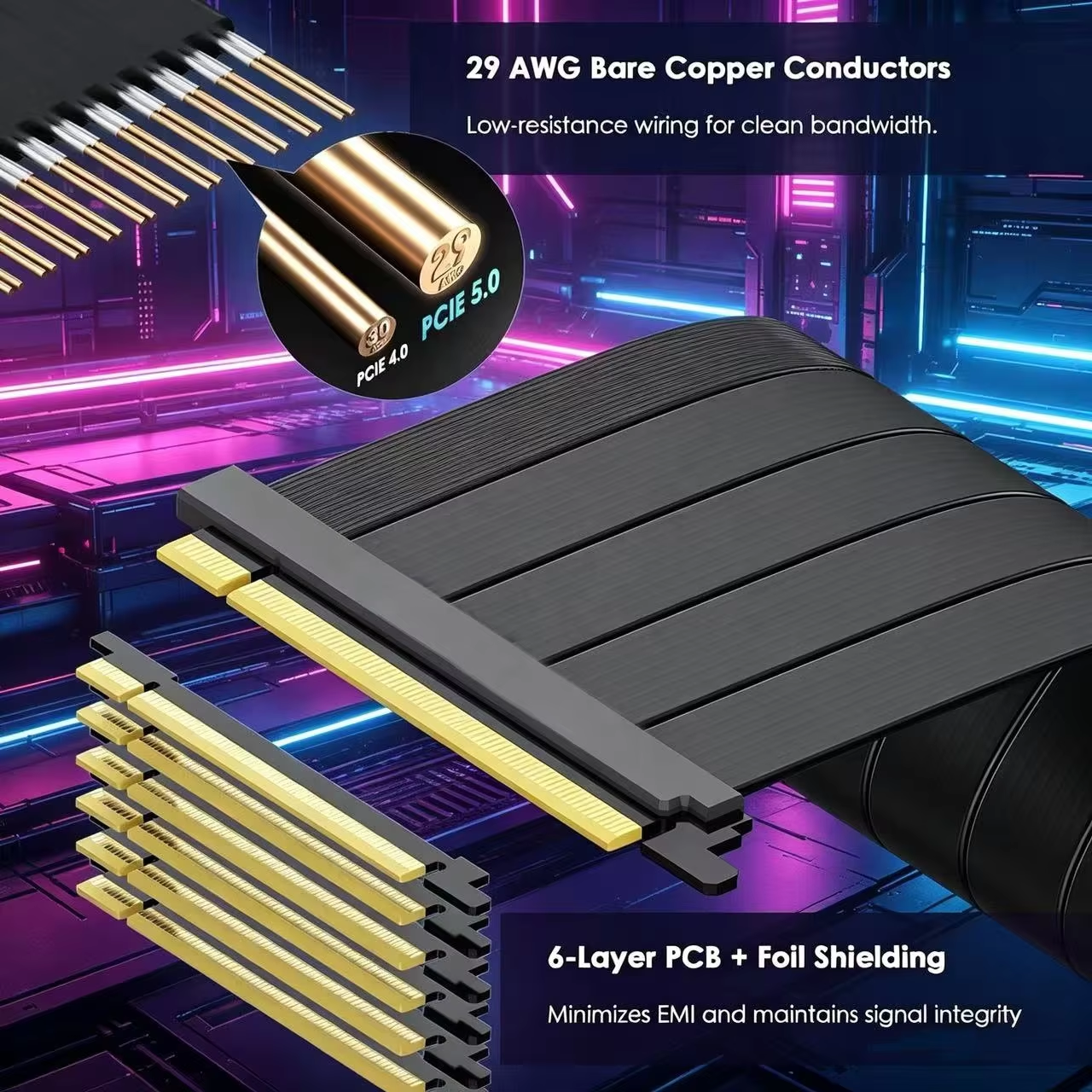
- Silver-Plated Copper Conductors: Utilizing high-purity silver-plated copper cores reduces conductor resistance and insertion loss over extended lengths (10cm to 50cm).
- Individual Pair Shielding: Each differential pair is wrapped in individual aluminum/PET foil shielding with dedicated drain wires, providing >95% EMI coverage.
- Impedance Control: Strict 85-ohm differential impedance matching across all 16 lanes minimizes reflections and signal distortion.
1.2 Form Factor and Cable Routing Mechanics
Chassis designers must choose between several connector orientations based on mechanical constraints:
- 180° Straight Connectors: Ideal for vertical GPU mounts in standard ATX cases where the riser plugs vertically into the motherboard.
- 90° Right-Angle Connectors: Designed for compact Small Form Factor (SFF) cases and 1U/2U server chassis where vertical clearance is limited.
- 270° Reverse Angle Connectors: Used in specialized custom liquid-cooling builds and inverted motherboard layouts.
2. B2B OEM & Customization Options
For server manufacturers and chassis OEM brands, off-the-shelf riser cables rarely meet specific mechanical layout demands. Maoye provides full ODM/OEM customization capabilities:
- Custom Cable Lengths: Tailored from 50mm up to 600mm with precise bend radii tolerance.
- PCB Reinforced Joints: Multi-layer PCB edge connectors with gold-finger plating (30u”) for high insertion-cycle durability.
- Custom Mounting Brackets: Integrated steel or aluminum mounting plates matching specific chassis mounting hole patterns.
3. Frequently Asked Questions (FAQ)
Q1: Can a PCIe 5.0 riser cable run backward compatible with PCIe 4.0/3.0 GPUs?
Yes, all Maoye PCIe 5.0 riser cables are fully backward compatible with PCIe 4.0 and PCIe 3.0 devices without requiring BIOS modifications.
Q2: What is the maximum recommended cable length for PCIe 5.0 x16 full-speed operation?
For unamplified passive copper risers, the recommended maximum length for full Gen 5 signal integrity is 30cm. For longer runs (up to 50cm), specialized low-loss dielectric materials and active redrivers may be incorporated.
Conclusion: Partner with a Certified Interconnect Manufacturer
Whether you are designing a flagship gaming case or building high-density AI servers, reliable PCIe 5.0 connectivity is critical. Contact Maoye Electrical today to discuss your technical specifications and request sample evaluation units.
Need Custom Cable Assemblies for Your System or OEM Project?
Dongguan Maoye Electronics is a professional OEM/ODM manufacturer specializing in PCIe risers, 12V-2x6 GPU power cables, and server wire harnesses.